Our Christmas markets in Europe guides
The Best Christmas Markets in Europe We Visited
On one Christmas market trip by train we filmed five places in Central Europe: Prague, Dresden, Vienna, Eisenstadt and Rust. Our short verdict: Dresden's Striezelmarkt, the oldest Christmas market in Germany, had the most old-fashioned Christmas feel; Prague's Old Town Square is the most fairytale setting; Vienna has the most markets, 13 of them, but its biggest one on Rathausplatz felt modern and crowded to us; Eisenstadt and Rust are the quiet, small-town escape. Below are the dates, what we ate, what to buy, how to get between the cities and where to stay.
| Place | Main market | Usual season | Best for |
|---|---|---|---|
| Prague | Old Town Square | Late November to 6 January | Fairytale setting, trdelník |
| Dresden | Striezelmarkt, Altmarkt | Late November to 24 December | Tradition, Christstollen, wooden crafts |
| Vienna | Rathausplatz and 12 more | 6 November 2026 to 6 January 2027 | Choice, ice rink, palaces |
| Eisenstadt | Esterházy Palace | Advent | A small palace market |
| Rust | Historic centre | Advent | A quiet lakeside town |
More about Christmas markets in Europe
When Do Christmas Markets in Europe Start?
Most Christmas markets in Europe open in the last week of November, at the start of Advent, and run until 23 or 24 December. In big cities like Prague and Vienna some markets stay open into the first week of January.
Vienna starts even earlier: its first markets open on 6 November 2026 (official info, October 2026). Our tip is to travel in the first three weeks of December: every stall is open and the crowds have not peaked yet.
1. Prague: the Old Town Square Christmas Market
Watch in the video · 0:00 Prague, with its Gothic towers, cobbled lanes and the skyline over the Vltava, already looks like a fairytale; at Christmas the smell of gingerbread and the lights take it further. Our Christmas market trip started here.
Prague Christmas markets: where and when
- Old Town Square: the heart of it all, with a giant Christmas tree and dozens of wooden huts below the Astronomical Clock. It usually runs from the last Saturday of November to 6 January (2026: 28 November to 6 January 2027; official info, October 2026).
- Wenceslas Square: on a more modern boulevard, strong on food and drink stalls, a pleasant walk from Old Town Square.
- Smaller markets: in the Prague Castle courtyard and on Republic Square (Náměstí Republiky), calmer and worth a look.
What to see between the markets
- Astronomical Clock: joining the crowd to watch the procession of the twelve apostles on the hour is a Prague ritual.
- Charles Bridge: statues, street artists and the castle view; early in the morning, before the crowds woke up, we had the bridge almost to ourselves, and it was magical.
- Prague Castle and St. Vitus Cathedral: a huge complex on the hill, with dazzling stained glass and the whole city below.
- Golden Lane: a tiny lane of colourful houses inside the castle, where alchemists are said to have lived.
What we ate in Prague
- Trdelník (chimney cake): dough wrapped around a spit, baked over the fire and rolled in sugar, cinnamon and walnuts. Our favourite was the one filled with Nutella or ice cream, and it beat the one we had later in Vienna.
- Goulash soup in a bread bowl: hot, spicy beef goulash served in a hollowed loaf; the best thing in that cold.
- Hot apple juice: simmered with cinnamon, cloves and orange peel and served in ceramic mugs.
We stayed at the EA Hotel Rokoko, right in the centre, a good base for the markets.
EA Hotel Rokoko prices Ad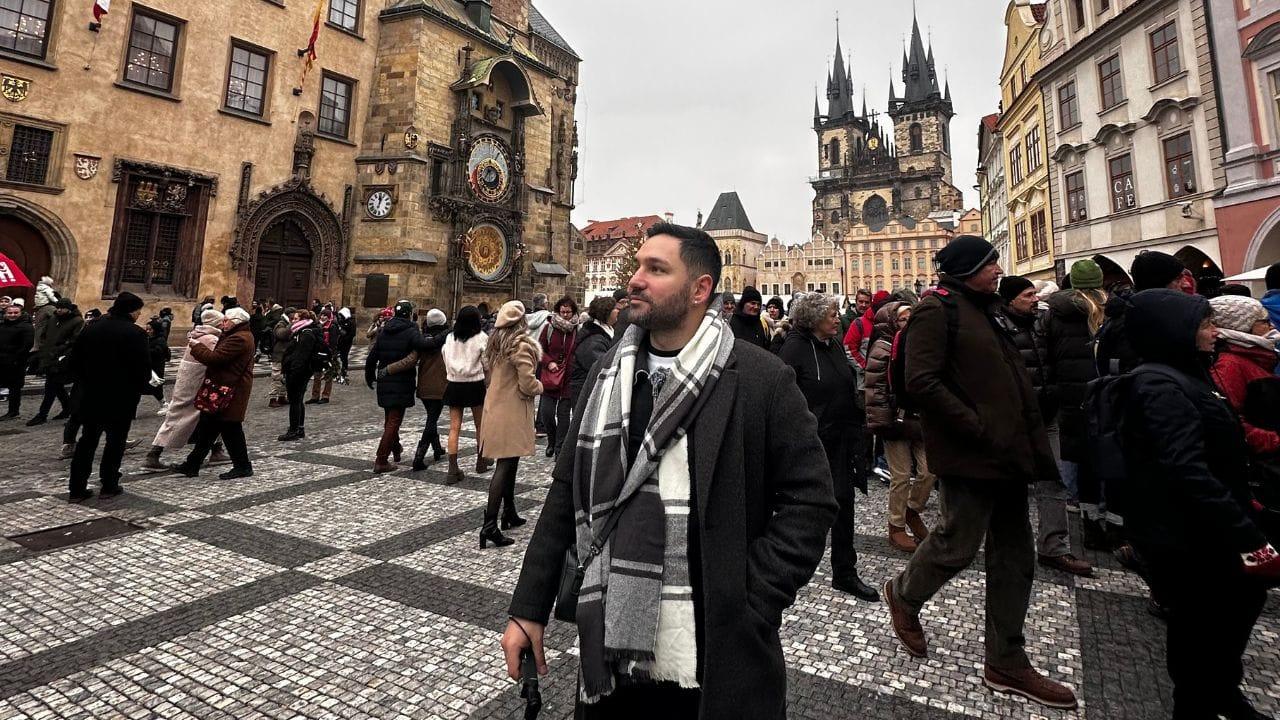
Old Town Square, the heart of Prague, with its giant Christmas tree and market.
See hotels near the Prague Christmas market Ad2. Dresden: the Striezelmarkt, Germany's Oldest Christmas Market
Watch in the video · 39:13 Dresden was badly damaged in the Second World War and rebuilt like a phoenix. Baroque architecture, the calm Elbe and the Striezelmarkt, Germany's most traditional Christmas market, make it a winter favourite. This is where we felt the old Christmas atmosphere most.
Dresden Christmas market: where and when
Dresdner Striezelmarkt: on Altmarkt square, with a history going back to 1434, which makes it the oldest Christmas market in Germany. In the middle stands a giant Erzgebirge Christmas pyramid, with a Ferris wheel and countless craft stalls around it.
It usually runs from late November to 24 December (2026: 25 November to 24 December; official info, October 2026).
What to see in Dresden
- Frauenkirche: the city's Baroque symbol, rebuilt after the war; climb the dome for a 360 degree view.
- Zwinger: walk the palace courtyard and see the Old Masters Picture Gallery, home of Raphael's Sistine Madonna.
- Semperoper: one of the most beautiful opera houses in the world, even more striking under the Christmas lights.
What to eat in Dresden
- Dresdner Christstollen: the buttery fruit loaf dusted with icing sugar that gave the market its name; there is even a festival where a giant stollen is cut.
- Hot drinks in a city mug: you pay a deposit (Pfand) of 2 to 3 euros for a ceramic mug designed for the market; keep it as a souvenir or return it for your deposit.
- Bratwurst and Currywurst: straight off the grill in a bread roll, with mustard or curry sauce.
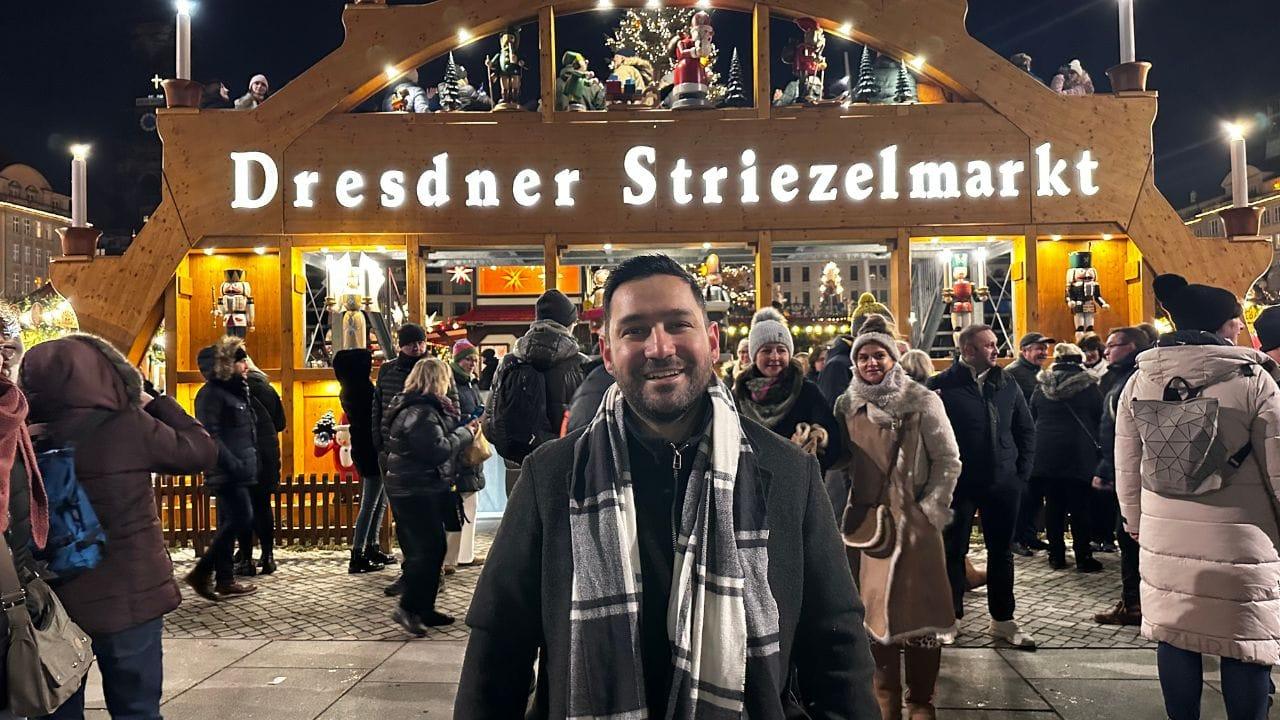
The Striezelmarkt, Germany's oldest Christmas market, at night.
3. Vienna: 13 Christmas Markets in the Imperial Capital
Watch in the video · 49:42 Vienna is the city of art, music and elegance, and at Christmas dozens of markets spread across it, each with its own theme. Dates, opening hours and the nearest station for all 13 markets are in our Vienna Christmas markets guide .
Vienna Christmas markets: where and when
- Wiener Christkindlmarkt (Rathausplatz): in front of City Hall, the biggest and best known, with a huge ice rink, a carousel and the heart tree. In 2026 it runs from 13 November to 26 December (official info, October 2026). Our honest take: very big, but modern and crowded.
- Schönbrunn Palace: in front of the imperial palace, calmer and more elegant, with crafts and traditional products; open until 6 January 2027 (official info, October 2026).
- Maria-Theresien-Platz: between the art and natural history museums, a stylish alternative.
What to see in Vienna
- Coffee houses: escape the cold in a historic Viennese café with a slice of cake and a Melange; we wrote up Café Demel and Café Landtmann .
- St. Stephen's Cathedral and the Hofburg: climb the cathedral tower for a bird's eye view, then walk the Habsburg palace; tickets and hours are in our things to do in Vienna guide .
What to eat in Vienna
- Apfelstrudel and Kaiserschmarrn: the thin-pastry apple strudel and the torn, caramelised pancake are the desserts to try.
- Wiener Schnitzel: the classic, traditionally veal, usually with potato salad; our picks are in our what to eat in Vienna guide .
- Kinderpunsch and Maroni: spiced, alcohol-free fruit punch is the favourite hot drink, and roasted chestnuts in a paper bag the best snack.
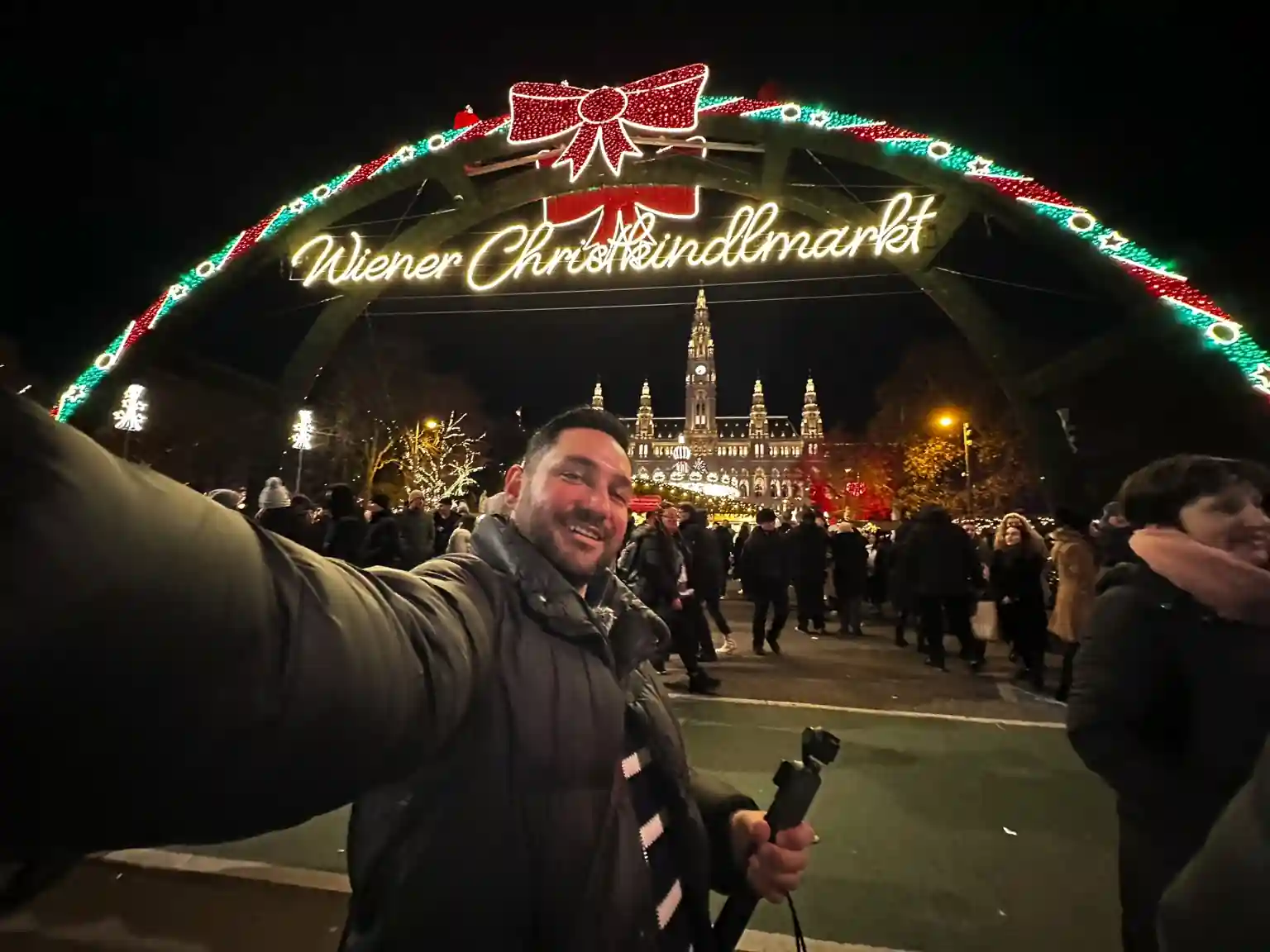
Vienna's Christmas markets against imperial architecture.
See Vienna Christmas market tours Ad See all Vienna hotels Ad4. Eisenstadt and 5. Rust: Quiet Christmas Markets in Burgenland
After the big cities we headed to two calmer, smaller and more authentic stops in Burgenland, in eastern Austria .
Eisenstadt: Haydn's town and a palace Christmas market
Eisenstadt, the town of the composer Joseph Haydn, lives with music and history. Its Christmas market is set up at the grand Esterházy Palace: handmade products from local makers and regional food between historic walls, in a far more intimate atmosphere than the city markets. The regional classic to try is Tafelspitz, boiled beef.
Rust: the town of storks
Watch in the video · 1:12:56 Rust, on the shore of Lake Neusiedl, is one of the smallest towns in Austria and famous for the stork nests on its roofs; its historic centre is part of a UNESCO World Heritage site. Its Christmas market sits in the old centre with handmade gifts. Tasting Austrian cheeses here was the most authentic moment of our trip.
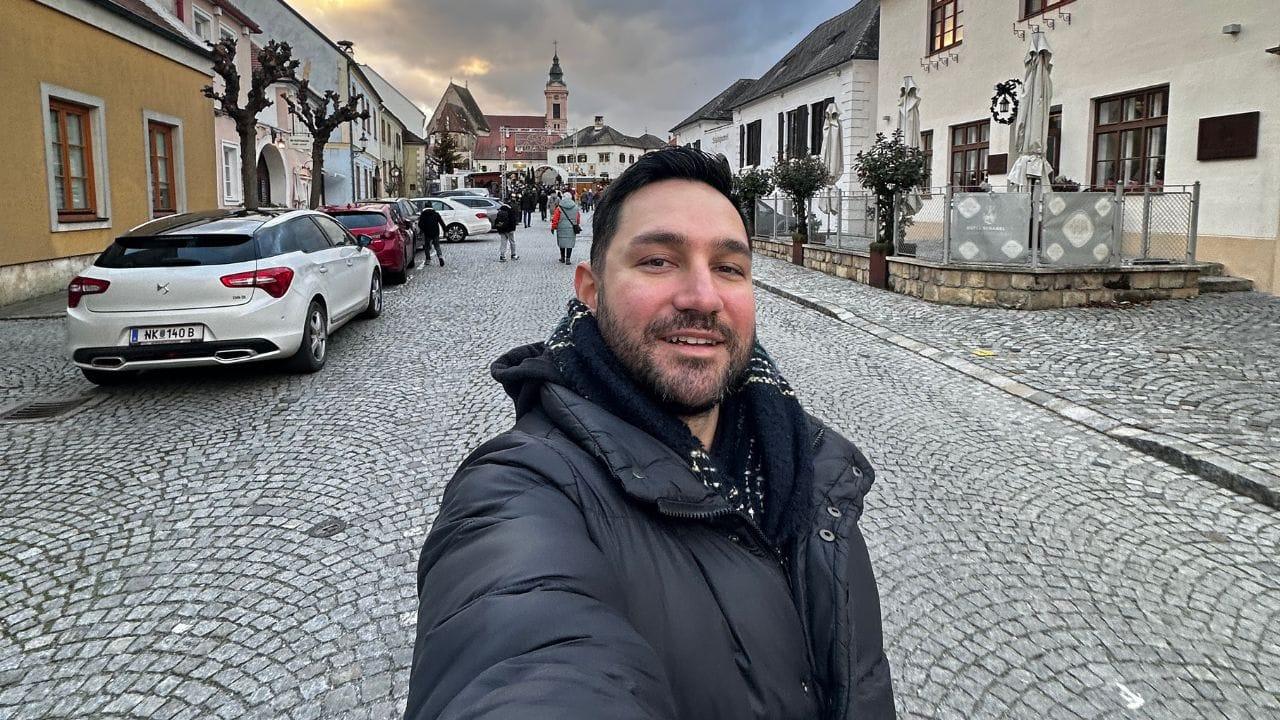
A Christmas away from the crowds: the quiet lanes of Rust.
Christmas Markets in Europe by Train: Our Route
The order and the transport make this route easy. This is the plan we followed and recommend:
- Start in Prague (Czechia). Fly into Prague and out of Vienna so you never backtrack.
- Prague to Dresden (Germany): about 150 km; the train takes about 2 hours 15 minutes along the Elbe valley, and buses are a cheaper option.
- Dresden to Vienna (Austria): about 450 km; the direct Railjet via Prague takes about 6 hours 45 minutes (official info, October 2026). We went Prague to Vienna by train with a change in Břeclav, about 4 hours, and the ticket with a change was cheaper than the direct one.
- Vienna to Eisenstadt and Rust: regular trains reach Eisenstadt in about 1 hour 15 minutes; Rust is a local bus or taxi ride from there. A rental car is the most flexible way to do both in a day.
What to Buy at the Christmas Markets
- Prague: Bohemian crystal and wooden puppets.
- Dresden: handmade wooden pieces from the Erzgebirge: Christmas pyramids, nutcrackers and smoking men (Räuchermännchen), and of course a Dresdner Christstollen.
- Vienna: snow globes (they were invented in Vienna), porcelain, Mozartkugel chocolates and Sachertorte.
- Eisenstadt and Rust: handmade ceramics and local honey.
What to Wear and How to Pay
You will spend hours outside in midwinter. Expect cold weather around freezing point, and snow is possible, so dress in layers:
- Base layer: thermal top and leggings.
- Mid layer: a fleece or wool jumper.
- Outer layer: a waterproof, hooded coat against wind and snow.
- Feet: waterproof, insulated boots with a good grip, plus thick wool socks.
- Accessories: hat, scarf and gloves.
Money: Germany and Austria use the euro; Czechia uses the Czech koruna (CZK). Many places in Prague accept euros, but the exchange rate is often poor, so carry some koruna. Small market stalls may not take cards, so always have some cash. All five places are in the Schengen Area; whether you need a visa depends on your passport, see our Austria visa guide .
Book Your Christmas Market Trip
Where to stay
Whichever city you start in, rooms for the market season fill up months ahead. For Vienna, our area by area picks are in our where to stay in Vienna guide .
See Prague hotels Ad See all Vienna hotels AdTours and tickets
In most of the market cities, guided evening walks and museum tickets are sold separately.
See Vienna tours and tickets AdYour questions answered
What are the best Christmas markets in Europe?
From our own trip: the Striezelmarkt in Dresden for tradition, Old Town Square in Prague for the setting, Vienna for choice with 13 markets, and Eisenstadt and Rust in Austria's Burgenland for a quiet small-town market. Dresden is where we felt the old Christmas atmosphere most.
When do Christmas markets in Europe start?
Most open in the last week of November, at the start of Advent, and run until 23 or 24 December; in Prague and Vienna some stay open into the first week of January. Vienna starts earliest: its first markets open on 6 November 2026 (official info, October 2026). The first three weeks of December are the liveliest time to go.
Do I need a visa for this Christmas market route?
Prague (Czechia), Dresden (Germany), Vienna, Eisenstadt and Rust (Austria) are all in the Schengen Area, so one visa or one visa-free stay covers the whole route. Whether you need a visa depends on your passport; see our Austria visa guide .
What should I wear to European Christmas markets?
Expect cold weather around freezing point, and snow is possible. Wear layers: a thermal base layer, a fleece or wool jumper and a waterproof hooded coat, plus waterproof insulated boots with a good grip, thick wool socks, a hat, a scarf and gloves.
How do you travel between Prague, Dresden and Vienna?
By train. Prague to Dresden is about 150 km and about 2 hours 15 minutes by train; buses are cheaper. Dresden to Vienna is about 450 km and about 6 hours 45 minutes on the direct Railjet via Prague (official info, October 2026).
We went Prague to Vienna with a change in Břeclav in about 4 hours. Eisenstadt is about 1 hour 15 minutes by train from Vienna, and Rust a local bus or taxi ride further; a rental car is the most flexible option.
What do you eat and drink at the Christmas markets?
In Prague, trdelník, goulash soup in a bread bowl and hot apple juice; in Dresden, Christstollen, Bratwurst and hot drinks in a ceramic mug with a deposit; in Vienna, Apfelstrudel, Kaiserschmarrn, Wiener Schnitzel, alcohol-free Kinderpunsch and roasted chestnuts (Maroni).
What should I buy, and do I need cash?
Bohemian crystal and wooden puppets in Prague, Erzgebirge woodwork and nutcrackers in Dresden, snow globes and Mozartkugel in Vienna, handmade ceramics and local honey in Rust and Eisenstadt. Small stalls may not take cards, so carry cash; Czechia uses the Czech koruna.
More Christmas markets in Europe
Other Christmas market guides Wachau, Hallstatt, Salzburg and Bratislava
 Things to do in Vienna: palaces, museums and schnitzel
 Vienna at Christmas: markets, Naschmarkt and schnitzel
 Vienna food tour from Figlmüller to Demel
 Hallstatt: the famous village, a day trip from Vienna
 Figlmüller or Plachutta? Vienna's best schnitzel
 Kaiserschmarrn and Viennese desserts at Demel
 Café Landtmann: Vienna's historic cafe


We review this page regularly. Prices, opening hours and rules can change, so double-check with official sources before you go.
Spotted something different on the ground? Let us know and we will fix it.
Some of the hotel, flight, ticket and car rental links on this page are affiliate links. If you book through them, we earn a small commission at no extra cost to you. It never changes what we recommend. Affiliate disclosure
Let's plan your trip together
How many days do you have, where are you starting from, what do you want to see? Tell us and we will answer from places we have explored.
Questions and answers are public: yours may help the next traveler who gets stuck in the same spot.
Hi! Ask anything about this guide and I’ll answer right away: areas, getting around, budget…
Answers are generated instantly by AI from the information on this page; Halil reviews them and publishes the useful ones. Your question is sent to an AI service (Anthropic) to prepare the answer; no name or email is required. Privacy Notice