TR
Skip to content
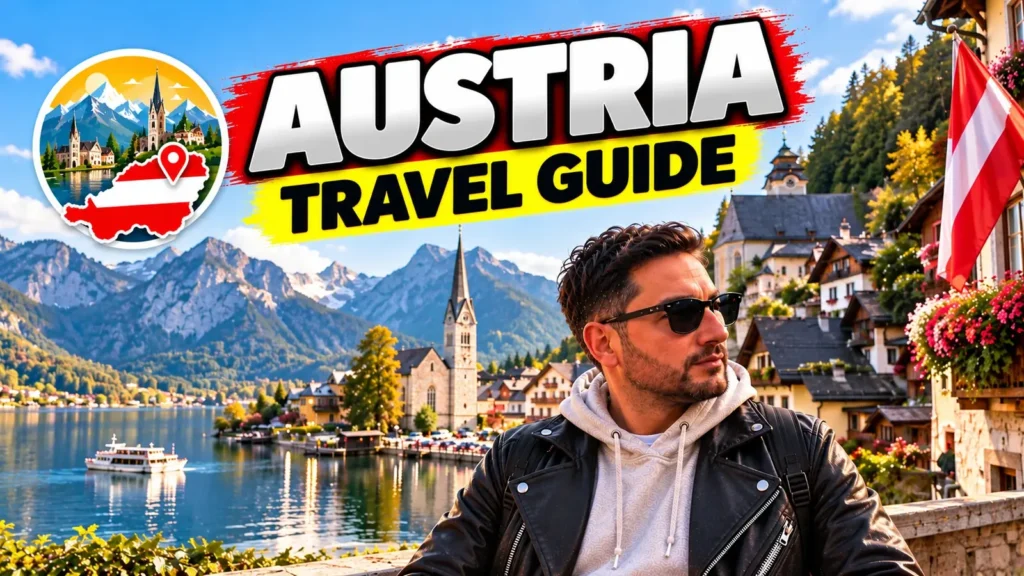
Austria travel guide: Hallstatt church on the lake shore, the Alps and the Austrian flag

Austria Travel Guide: Best Places and Itinerary

3 places15 guidesCountry guide

Austria is a landlocked country in Central Europe, at the eastern end of the Alps, and its capital Vienna sits on the Danube. Most of the great places to visit in Austria are at the two ends of the country: Vienna and the Wachau valley in the east, Salzburg and lakeside Hallstatt in the west. The currency is the euro and the time zone is Central European Time.

We have travelled to Austria twice. On the first trip we stayed in Vienna and did day trips to the Wachau valley, Hallstatt, Salzburg and Bratislava, one hour away by train; on our Christmas trip we toured the Vienna markets and stopped in Eisenstadt and Rust in Burgenland. The dots on the map open our guide and video for each place.

Which place for whom: Vienna for palaces, museums and coffee houses; Hallstatt and Salzburg for lakes and mountains; the Wachau for Danube abbeys and small towns; late November and December for the Christmas markets.

On a first trip, make Vienna your base: everything else on this page works as a day trip from there. Good places to visit in Austria beyond the big names, from our own trips: Melk and Dürnstein in the Wachau, and Eisenstadt and Rust in Burgenland.

Where do you want to go in Austria?

Tap a place: how to get there, how long, day trip or stay; our guide, video and tickets right below.
Vienna and the DanubeThe capital and the Wachau valley
Alps and lakesSalzburg and Hallstatt
Neighbouring capitalsSame Schengen area, by train

Vienna

Vienna and the Danube
Getting there
Most international flights land at Vienna International Airport (VIE); the CAT bus runs to Wien Mitte and Railjet trains reach the main station in about 15 minutes (official info, 16 October 2026).
Day trip or stay
The base for the whole trip; give it at least three days. First time: the old town (Innere Stadt).

Map of Austria

Tap a dot to see the place and open its card. Borders from Natural Earth, dots at real coordinates.

Our Austria guides

Do You Need a Visa for Austria? Schengen and Nearby Capitals

Schengen Area

US, UK, Canadian, Australian and EU citizens visit visa free for short stays; many other passports need a Schengen visa. Check your nationality before you book.

Do I need a visa for Austria?

Bratislava, Budapest and Prague: same Schengen rules

Slovakia, Hungary and Czechia are in Schengen too; trains cross the borders without passport control, but carry your passport, ID checks can happen on the train.

Schengen and the neighbours on the same entryOpen

Austria is in the Schengen area, so whether you need a visa depends on your passport; the rules passport by passport are in our Austria visa  guide. Slovakia, Hungary and Czechia are in Schengen too, so Bratislava, Budapest and Prague are covered by the same entry; there are no border controls on the train, but ID checks can happen, so carry your passport.

Schengen Area

US, UK, Canadian, Australian and EU citizens visit visa free for short stays; many other passports need a Schengen visa. Check your nationality before you book.

Do I need a visa for Austria?

Bratislava, Budapest and Prague: same Schengen rules

Slovakia, Hungary and Czechia are in Schengen too; trains cross the borders without passport control, but carry your passport, ID checks can happen on the train.

How to get to Austria

4 ways to get there
Fly into Vienna (VIE)Main airportDirect flights from most European hubs; from the airport the CAT express or Railjet trains run to the cityCompare flights to Vienna  Ad
Fly into Salzburg (SZG)Closest airport to HallstattSmaller airport with fewer routes; Hallstatt is closer from Salzburg than from ViennaCompare flights to Salzburg  Ad
Vienna to Salzburg by trainRailjet Xpress about 2 hours 25 minutesFly into Vienna and continue by train; change in Salzburg area for HallstattVienna to Salzburg train times  Ad
From Prague or Budapest by trainPrague about 4 hours, Budapest 2 hours 40 minutesWe came from Prague with a change in Breclav on our Christmas trip; the connecting ticket was cheaper than the direct oneTrain times  Ad

Best Time to Visit Austria

December is the busiest month with the Christmas markets: on December Saturday nights Vienna has about half as many hotels available as on the same night in January, so book early. July and August bring the summer crowds; January, February and March are the quietest months.

January, quietFebruary, quietMarch, quietApril, moderateMay, moderateJune, moderateJuly, busiestAugust, busiestSeptember, moderateOctober, moderateNovember, moderateDecember, busiest

Darker months are the busiest.
Season by seasonOpen

The best time to visit Austria depends on what you come for: May and June for green valleys and open lake boats, late November and December for the Christmas markets, January to March for quiet cities and skiing.

  • Late November and December: the things to do in Austria in December centre on the Christmas markets, which are open while the cities are lit up; this is the busiest time of year, and hotels fill early on December weekends. Go midweek and book early.
  • May and June: when we travelled in spring, the Wachau was bright green and the boat tours on Lake Hallstatt were running.
  • July and August: summer crowds; in Salzburg, hotels fill early during the summer festival.
  • January to March: the cities are quiet and the Alps are in ski season.

How much a trip to Austria costs

From official price lists and our own receipts, per person (official info, October 2026); the Hallstatt boat is what we paid.

Vienna 24 hour public transport ticket
€9.70

Digital in the app; paper ticket from machines €10.20 (official info, October 2026)

CAT express from the airport
€14.90

One way; the S-Bahn line is closed until 31 October 2027 (official info, October 2026)

Hohensalzburg Fortress
€19.20

Funicular included (official info, October 2026)

Boat ride in Hallstatt
€14

Half an hour, what we paid

Best Places to Visit in Austria: Cities, Lakes and Danube Villages

The best places to visit in Austria for a first trip are Vienna, Salzburg, Hallstatt on its lake and the Wachau valley on the Danube; we have been to all four, plus Eisenstadt and Rust in Burgenland. The top things to do in Austria follow the same map: palaces and coffee houses in Vienna, a boat on Lake Hallstatt, the fortress in Salzburg and the abbeys of the Wachau.
Cities:

  • Vienna: Schönbrunn and Hofburg palaces, the Belvedere, St. Stephen's Cathedral, museums and coffee houses. The largest city in Austria and the base for the trip; give it at least three days. Our stop by stop list is in things to do in Vienna , transport and how many days in our Vienna travel guide .
  • Salzburg: Mozart's birthplace, an old town under Hohensalzburg Fortress (€19.20 including the funicular, official info, 16 October 2026) and the Mirabell Gardens; the closest big city to the Alps and the lakes. It was the last stop of our Hallstatt day trip, so we did not stay overnight.
  • Eisenstadt and Rust: two small towns in Burgenland, southeast of Vienna, where we stopped on our Christmas trip. Rust lies on the shore of Lake Neusiedl (official info, 20 October 2026).

Lake and Danube villages:

  • Hallstatt: a small village between the lake and the mountain. We came on a day trip from Vienna; tickets up the mountain were sold out by the afternoon, so we took the half hour boat tour instead (€14, the amount we paid). Details in our Hallstatt travel guide .
  • Wachau valley: Göttweig and Melk abbeys on the Danube, with Dürnstein, known for its apricots, in between. We saw it in one day from Vienna, together with Hallstatt and Salzburg.

Graz, Linz and Innsbruck are among the other big cities in Austria; we have not been to these three. Of the Austrian lakes we have seen Lake Hallstatt and Lake Neusiedl at Rust; we have not been to Wolfgangsee, Zell am See, the mountain villages of Tyrol or the ski resorts.

Austria Itinerary: How Many Days for 3, 5 or 7 Days

3 days for Vienna and one day trip, 5 days to add the Wachau, Hallstatt and Salzburg, 7 days to travel east to west.

Day by day plans and toursOpen

How many days in Austria? Three days are enough for Vienna and one day trip, five days let you add the Wachau, Hallstatt and Salzburg, and seven days let you travel from east to west.

13 day Austria itinerary: ViennaTwo days in Vienna : St. Stephen's, the Hofburg, Schönbrunn, the Belvedere and the coffee houses. On day three, the one hour train to Bratislava; we went in the morning and were back in the afternoon.
25 day Austria itinerary: Vienna plus the Wachau, Hallstatt and SalzburgAdd one long day to three days in Vienna: Göttweig, Dürnstein and Melk, then Hallstatt and Salzburg. We did this on a small group tour and were back in Vienna at midnight. Day five is Bratislava.
37 day Austria itinerary: east to west by trainFour nights in Vienna, then the train to Salzburg for two nights, with the day in between for Hallstatt and the lakes. Fly home from Salzburg. This Austria itinerary works by train from start to finish, no car needed.

Austria Currency and Prices: Euro, Cards, Tipping, Tax Free

The currency is the euro. In Vienna a schnitzel at a restaurant costs about €20 to €30, cake and coffee at a coffee house €10 to €19 (official info, 19 October 2026).

Cards, tipping, tax free and the neighbours' moneyOpen

The currency of Austria is the euro (official info, 20 October 2026); before the euro, the Austrian currency was the schilling, which euro notes and coins replaced in 2002. In Vienna a schnitzel at a restaurant costs about €20 to €30, and cake with coffee at a coffee house about €10 to €19 (official info, 19 October 2026).

A 24 hour public transport ticket in Vienna is €9.70 in the app and €10.20 as a paper ticket from the machine (official info, 19 October 2026).

  • Card or cash: cards are accepted in most places but not everywhere; small shops, cafés and market stalls may want cash, so check the card sign at the door and carry some euros. ATMs work around the clock (official info, 20 October 2026).
  • Tipping: not compulsory; in Vienna people leave about 10 percent in restaurants and cafés, and 5 percent is enough on a very large bill. You can add it when you pay by card (official info, 20 October 2026).
  • Tax free: visitors who live outside the EU and hold a non EU passport can claim the VAT back on a receipt over €75; the refund depends on the VAT rate of the item and the fee of the refund company. The goods must leave in your personal luggage and be stamped by customs on the way out (official info, 20 October 2026).
  • Neighbouring countries: Germany, Italy, Slovenia and Slovakia also use the euro; Czechia and Hungary have their own currencies, so plan for that if you continue to Prague or Budapest.

What we ate in Vienna and what we paid is in our what to eat in Vienna  guide.

Austria Time Zone and Plug Type

Central European Time (UTC+1, UTC+2 in summer), the same as Berlin and Rome; plugs are type C and F, 230 volts.

Summer time and plugsOpen

The Austria time zone is Central European Time (CET, UTC+1), and Vienna switches to summer time (CEST, UTC+2) with the rest of the EU. Vienna, Austria time is the same as in Berlin, Rome and Paris: for most of the year six hours ahead of New York and one hour ahead of London.

  • Summer time: Austria moves to summer time on the last Sunday of March and back to winter time on the last Sunday of October (official info, 20 October 2026).
  • Plugs: type C and F, 230 volts (official info, 20 October 2026). Travellers from the US, Canada, the UK and Australia need a plug adapter; from North America, also check that your charger accepts 230 volts.

Driving in Austria: Vignette and Toll Roads

Motorways need a vignette: 10 days €12.80, one year €106.80 for a car (official info, 20 October 2026). The cities are easy by train; a car helps for Hallstatt and the lakes.

Digital vignette, motorcycles, toll tunnels and car rentalOpen

Every vehicle up to 3.5 tonnes on Austrian motorways and expressways needs a vignette (Vignette in German). For a car: 1 day €9.60, 10 days €12.80, 2 months €32, one year €106.80 (official info, 20 October 2026).

  • When it is valid: if you buy the Austria vignette online, a 1 day or 10 day digital vignette can start right away; a 2 month or annual vignette bought online is valid from the 18th day at the earliest. From 2027 the sticker vignette ends and only the digital vignette is sold (official info, 20 October 2026).
  • Where to buy it: the digital vignette is sold on the official ASFINAG shop and app; it is linked to your number plate, so there is no sticker on the windscreen. During 2026 the sticker vignette is still sold at petrol stations near the borders (official info, 20 October 2026). Digital vignette (official sale) 
  • Motorcycles: 1 day €3.80, 10 days €5.10, 2 months €12.80, one year €42.70 (official info, 20 October 2026).
  • Extra tolls: the Brenner (A13), the Tauern and Katschberg tunnels (A10), Karawanken (A11), Arlberg (S16) and the Gleinalm and Bosruck tunnels (A9) charge a separate toll; no vignette is checked on these sections (official info, 20 October 2026).
  • Do you need a car: the cities are easy by train; a car helps for Hallstatt and the lakes. With a rental car, ask whether the vignette is included.

Where to Stay in Austria: Vienna or Salzburg?

On a short trip, one base in Vienna; first time, the old town (Innere Stadt). For the Alps and lakes, two nights in Salzburg.

Areas, our hotel and hotelsOpen

On a short trip, stay in Vienna only; it also has the widest choice of hotels in Austria. Hallstatt and Salzburg can be done in one day from there, but it is a long day. For the Alps and the lakes, spend two nights in Salzburg.

  • Vienna: on a first visit, the old town (Innere Stadt); for lower prices and café streets, Neubau. On our Christmas trip we stayed at the Mercure Grand Hotel Biedermeier Wien in Landstraße. Hotels area by area are in where to stay in Vienna .
  • Salzburg: the old town or the Mirabell side (Neustadt); we did not stay in Salzburg.
  • Hallstatt: the village is small and has few rooms; we did not stay, we came on a day trip from Vienna.

Austrian Food: Schnitzel, Tafelspitz, Sachertorte

Wiener Schnitzel, Tafelspitz, Kaiserschmarrn and Sachertorte: which one we tried where.

What we ate and whereOpen

The best known Austrian dish is Wiener Schnitzel, and the best known desserts are Sachertorte and Kaiserschmarrn; we tried all three where they come from.

  • Wiener Schnitzel: the original is veal, served with potato salad and lingonberry sauce. On the menu, "vom Kalb" means veal and "vom Schwein" means pork.
  • Tafelspitz: boiled beef; we had it at Plachutta Wollzeile  in Vienna.
  • Kaiserschmarrn and cakes: a torn, sweet pancake; we had it at Café Demel . For the coffee house experience, Café Landtmann .
  • Sachertorte: we tried Sachertorte and Linzer torte at Café Sacher in Salzburg and were not impressed.

Where we ate in Vienna and what each meal cost is in our what to eat in Vienna  guide.

Christmas Markets in Austria

Vienna has 13 major Christmas markets, the largest is the Wiener Christkindlmarkt on Rathausplatz; on our Christmas trip we also visited the market at Esterházy Palace in Eisenstadt.

Markets, dates and routeOpen

The biggest Christmas markets in Austria are in Vienna: the city has 13 major markets, each with its own dates, and the largest is the Wiener Christkindlmarkt on Rathausplatz. On our Christmas trip we walked the big market on Rathausplatz with its ice rink and the Ferris wheel inside the market, and stopped at the market at Esterházy Palace in Eisenstadt.

Dates and opening hours of all 13 are in our Vienna Christmas markets  guide; the route where we compare Vienna with Prague and Dresden is in the best Christmas markets in Europe .

What Language Is Spoken in Austria?

The official language is German (official info, 19 October 2026); there is no separate Austrian language, but some words differ from Germany. English is widely spoken in tourist areas.

Austrian words and EnglishOpen

The official language of Austria is German (official info, 19 October 2026); the local form is called Austrian German. There is no separate Austrian language, but some words differ from Germany:

  • Paradeiser: tomato (Tomate in Germany).
  • Marille: apricot (Aprikose in Germany).
  • Jänner: January (Januar); you will see it on calendars and event dates.
  • Grüß Gott and Servus: greetings. Grüß Gott in shops and formal places, Servus between friends, for both hello and goodbye.

English is widely spoken in tourist areas; we got by in English in museums and hotels. The Croatian, Slovene and Hungarian minorities also have special language rights by law (official info, 19 October 2026). Phrases with audio are in our German phrases  guide.

Where Is Austria? Map, Neighbours and Capital

A landlocked country in Central Europe; the capital is Vienna, it has eight neighbours and Vienna sits at its eastern edge.

Neighbours, capital and geographyOpen

Austria is a landlocked country in Central Europe and its capital is Vienna. It has eight neighbours: Germany and Czechia to the north, Slovakia and Hungary to the east, Slovenia and Italy to the south, Switzerland and Liechtenstein to the west.

Vienna is at the eastern edge of the country, about one hour by train from Bratislava, the capital of Slovakia. The west and centre of Austria are Alpine, the east is flat along the Danube. The map above marks the places we went.

More about Austria

Getting to Austria and Getting Around by Train

Most international flights land at Vienna International Airport (VIE). Austria also has airports in Salzburg, Innsbruck, Graz, Linz and Klagenfurt. Compare flights to Vienna  Ad

  • Vienna airport to the city: the main S-Bahn line is closed from 7 September 2026 to 31 October 2027; in that period take the CAT bus to Wien Mitte (€14.90 one way) or a Railjet train to the main station, Wien Hauptbahnhof, in about 15 minutes (official info, 16 October 2026).
  • Trains from Vienna: the Railjet of ÖBB, the Austrian national railway, reaches Salzburg in 2 hours 25 minutes; Bratislava is about 1 hour away and Budapest 2 hours 40 minutes. Hallstatt takes 3 to 4 hours with a change at Attnang-Puchheim, then a short ferry from the station to the village (official info, 16 October 2026). Vienna to Salzburg train times  Ad
  • From Prague or Budapest: on our Christmas trip we came from Prague by train with a change in Břeclav, about 4 hours; the ticket with a change was cheaper than the direct one. Vienna to Budapest train times  Ad
  • By car: motorways need a vignette (a toll pass); prices, extra toll tunnels and car rental are in the next section.

Your questions answered

What currency does Austria use?

The euro (official info, 20 October 2026). Cards work in most places but not everywhere, so carry some cash for small shops and cafés. Germany, Italy, Slovenia and Slovakia also use the euro; Czechia and Hungary have their own currencies.

What time zone is Vienna, Austria in?

Central European Time (CET, UTC+1), and summer time (CEST, UTC+2) from the last Sunday of March to the last Sunday of October. For most of the year Vienna is six hours ahead of New York and one hour ahead of London.

What is the best time to visit Austria?

May and June for green valleys and running lake boats, late November and December for the Christmas markets (the busiest time, book early), January to March for quiet cities and skiing. July and August are crowded, especially in Salzburg during the summer festival.

How many days do you need in Austria?

Three days for Vienna and one day trip, five days to add the Wachau, Hallstatt and Salzburg, seven days to travel east to west by train. The day by day plan is in the itinerary section.

Can you visit Hallstatt and Salzburg on a day trip from Vienna?

Yes, but it is a long day. We passed Göttweig, Dürnstein and Melk, then saw Hallstatt and Salzburg on a small group tour and were back in Vienna at midnight. By train, Hallstatt takes 3 to 4 hours with a change at Attnang-Puchheim (official info, 16 October 2026).

Is Austria expensive?

In Vienna a schnitzel at a restaurant costs about €20 to €30 and cake with coffee €10 to €19 (official info, 19 October 2026); a 24 hour transport ticket is €9.70 in the app (official info, 19 October 2026). Hotels make the biggest difference: staying outside the centre and avoiding December weekends saves the most.

Do I need a vignette to drive in Austria?

Yes, on motorways and expressways. For a car, 10 days cost €12.80 and one year €106.80 (official info, 20 October 2026); the digital vignette is linked to your number plate. Some tunnels and the Brenner charge a separate toll.

What language do they speak in Austria?

German, in its Austrian form; some words differ, such as Paradeiser for tomato and Grüß Gott as a greeting. English is widely spoken in tourist areas; we used English in museums and hotels.

Do I need a plug adapter in Austria?

Austria uses type C and F plugs at 230 volts (official info, 20 October 2026), so visitors from the US, Canada, the UK and Australia need an adapter.

How we made this page

The places on the map and the list of guides come from our published Austria pages; when a new guide goes live, it joins the list.

Travel times, airport and visa information (official info, 16 October 2026); currency, tipping, time zone, plug and vignette information from official sources (official info, 20 October 2026); restaurant prices from the venues' own menus (official info, 19 October 2026); experiences from our own trips. Times and fees can change, so check before you go.

Spotted something different on the ground? Let us know and we will fix it.

Where next

More guides on this topic
Neighbouring countries
AdAbout our affiliate links

Some of the hotel, flight, ticket and car rental links on this page are affiliate links. If you book through them, we earn a small commission at no extra cost to you. It never changes what we recommend. Affiliate disclosure 

Gezginbirchef logo
Gezginbirchef

Let's plan your trip together

How many days do you have, where are you starting from, what do you want to see? Tell us and we will answer from places we have explored.

Questions and answers are public: yours may help the next traveler who gets stuck in the same spot.

No questions yet. Be the first to ask.

Hi! Ask anything about this guide and I’ll answer right away: areas, getting around, budget…

Answers are generated instantly by AI from the information on this page; Halil reviews them and publishes the useful ones. Your question is sent to an AI service (Anthropic) to prepare the answer; no name or email is required. Privacy Notice