
198 phrases in 10 topics
How to Say Hello in German: Good Morning, How Are You, Goodbye
- Words
- 14
- Where
- Everywhere
- Level
- Easy
How do you say hello in German? The word that works everywhere is Hallo (HAH-loh). When you walk into a shop, a restaurant or a hotel, the greeting for the time of day sounds more polite: Guten Morgen (good morning in German), Guten Tag (good day) and Guten Abend (good evening).
Among friends, good morning in German is informal and short: just Morgen! Good night in German is Gute Nacht, said only when you leave late at night or go to bed, never as an evening hello.
How are you in German has two forms: Wie geht's? to someone you know and Wie geht es Ihnen? to a stranger. A friendly "hi, how are you" in German is Hallo, wie geht's? (HAH-loh, vee gayts).
Goodbye in German is formal Auf Wiedersehen or informal Tschüss. These German greetings work in Germany, Austria and Switzerland; the greetings you only hear in Austria (Grüß Gott, Servus, Baba) are in section 9, and Swiss Grüezi in section 10.
Thank You in German, Please, Excuse Me, Yes and No
- Words
- 18
- Where
- Everywhere
- Level
- Easy
How to say thank you in German: Danke (DAHN-keh) is enough; the warmer forms are Danke schön and Vielen Dank. Please in German is Bitte (BIT-teh), and the same word also means you're welcome, so the reply to a thank you is Bitte or Gern geschehen. Yes is Ja (yah) and no is Nein (nine).
These easy German phrases are the basic words travellers need most; this page is not a language course, just enough to get through the day with a short sentence. Address strangers and staff with Sie (formal you); du is for friends and children. Excuse me in German is Entschuldigung, the word to start with when you call a waiter or stop someone in the street.
How do you say sorry in German? Es tut mir leid (es toot meer lite) is the real apology, for when you made a mistake.
German Phrases at a Restaurant or Café: Ordering, the Bill, Pork or Veal
- Words
- 27
- Where
- Restaurants, cafés
- Level
- Easy
Once you sit down, ask for the menu with Die Speisekarte, bitte; to order, say Ich hätte gern … and add the name of the dish. For the bill, check please in German is Zahlen, bitte; the waiter will often ask Zusammen oder getrennt?, whether you pay together or separately. Enjoy your meal is Guten Appetit (GOO-ten ah-peh-TEET).
In Vienna the classic Wiener Schnitzel is made from veal and appears on menus as vom Kalb. Some well known schnitzel places also make it with pork, so ask about the meat before you order. Where we ate and what we ordered is in our what to eat in Vienna guide.
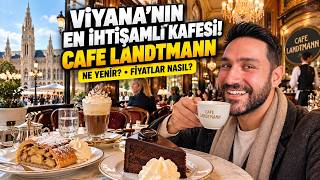
In Austrian coffee houses, coffee with frothed milk is a Melange (meh-LAHNZH). We ordered one at Café Landtmann in Vienna; it tastes very close to a cappuccino, with a little more milk.
German Words for Trains and Transport: Ticket, Platform, Change
- Words
- 25
- Where
- Trains, metro, street
- Level
- Easy
On train and metro signs you will see Gleis (platform), Abfahrt (departure), Ankunft (arrival) and Ausgang (exit) more than anything else. At the ticket machine, knowing Fahrkarte (ticket), Nur hin (one way) and Hin und zurück (return) saves time.
On a journey with a change you will hear umsteigen (to change trains); if an announcement says Verspätung, the train is late.
To ask for directions in German, Wo ist …? (where is …?) is enough; the answer will include links (left), rechts (right) and geradeaus (straight ahead). At Vienna Airport we bought our ticket from the machine next to the train and got off at Wien Hauptbahnhof, the main station. Getting around the city is covered in our Vienna travel guide .
German at the Hotel and in Shops: Reservation, Breakfast, How Much
- Words
- 17
- Where
- Hotels, shops
- Level
- Easy
At hotel check in, Ich habe eine Reservierung plus your name is all you need. In a shop, ask the price with Wie viel kostet das? and whether you can pay by card with Kann ich mit Karte zahlen?. If a sales assistant offers help, Ich schaue nur (I'm just looking) is a polite answer. On the door, geöffnet means open and geschlossen closed.
Away from the hotel Wi-Fi you need data for maps and translation apps; an eSIM can be installed on your phone before you leave. See Yesim eSIM plans Ad How it works is explained in our eSIM guide .
German Numbers 1 to 20, 100 and 1000 with Pronunciation
- Words
- 31
- Where
- Prices, times, platforms
- Level
- Medium
German numbers from 1 to 12 are separate words; from 13 to 19 you add -zehn (tsayn) to the end. The tens end in -zig, except 30, which is dreißig. After 20 the numbers are said backwards: 21 is einundzwanzig, literally "one and twenty", and 35 is fünfunddreißig. All German numbers from 1 to 100 follow this rule; 1000 is tausend.
Below are the German numbers from 0 to 20 one by one, then the tens, 100 and 1000, each with its pronunciation and audio, so you can hear how to pronounce German numbers before you need them. This is the section you will use most when you ask a price or listen for a time or a platform number.
Days of the Week in German, Months, Seasons and Time
- Words
- 25
- Where
- Tickets, calendars, bookings
- Level
- Easy
The days of the week in German end in -tag and are easy to say; the exception is Wednesday, Mittwoch, literally "midweek". The months look like the English names but sound different: Januar (YAH-noo-ahr), Juni (YOO-nee), Juli (YOO-lee).
They help when you read a museum calendar, a ticket or a booking email. In Austria January is often written Jänner, see section 9.
The four seasons fit on one line: Frühling (spring), Sommer (summer), Herbst (autumn) and Winter. To ask the time, say Wie spät ist es?; to ask when something starts, Um wie viel Uhr?.
German Phrases for Emergencies: Hilfe, Arzt, Apotheke, Polizei
- Words
- 13
- Where
- Emergencies
- Level
- Easy
In an emergency, call the emergency number first, then explain with a few short words. Hilfe! (help) and Ich brauche einen Arzt (I need a doctor) are enough. A pharmacy is an Apotheke; in Germany and Austria its sign is a big red letter A. If you have an allergy, add its name after Ich bin allergisch gegen ….
If your passport needs a Schengen visa, travel health insurance is part of the application; the documents are listed in our Austria visa guide.
Austrian German Words: Grüß Gott, Servus, Paradeiser, Marille
- Words
- 23
- Where
- Austria
- Level
- Medium
The language of Austria is German, but in daily life some words differ from Germany; together they are called Austrian German. The greeting you will hear most when you walk into a shop is Grüß Gott (gruess got). Among friends, Servus works as both hello and goodbye, and Baba is a casual bye.
On menus and in supermarkets, tomato is Paradeiser, potatoes are Erdäpfel, apricot is Marille, fresh soft cheese is Topfen and whipped cream is Schlagobers; on calendars January is Jänner.
Each row also shows the word used in Germany. If you use the word you learned for Germany, people in Austria will still understand you; this list is mainly for reading menus and signs.
If you are going to Vienna, places to visit and a route are in our Vienna travel guide .
Swiss German Phrases: Grüezi, Merci and a Few Differences
- Words
- 5
- Where
- Switzerland
- Level
- Easy
In the German speaking parts of Switzerland, everyday speech is Swiss German, while writing, signs and official texts use standard German. If you speak standard German, people understand you. The greeting you will hear most is Grüezi (GRUE-et-see), and Merci is a very common thank you. On the train, a ticket is a Billett and the platform is the Perron.
Swiss spelling does not use the letter ß: a word written Straße in Germany is Strasse in Switzerland.
Your questions answered
How do you say hello in German?
The everyday word is Hallo (HAH-loh); during the day the more polite Guten Tag (GOO-ten tahk). In Austria you will hear Grüß Gott (gruess got) a lot, and in Switzerland Grüezi (GRUE-et-see).
How do you say good morning in German?
Guten Morgen (GOO-ten MOR-gen). It is used until about midday; after that people say Guten Tag.
How do you say goodbye in German?
Formal Auf Wiedersehen (owf VEE-der-zay-en), informal Tschüss (chooss). In Austria friends also say Servus or Baba.
How do you say how are you in German?
To someone you know, Wie geht's? (vee gayts); to a stranger, Wie geht es Ihnen? (vee gayt es EE-nen). Gut, danke (goot, DAHN-keh) is a fine answer.
How do you say thank you in German?
Danke (DAHN-keh). Warmer forms are Danke schön (DAHN-keh shurn) and Vielen Dank (FEE-len dahnk).
How do you say please and you're welcome in German?
Both are Bitte (BIT-teh). As a reply to thank you you can also say Gern geschehen (gairn geh-SHAY-en).
How do you say excuse me in German?
Entschuldigung (ent-SHOOL-dee-goong). It works to get a waiter's attention, to pass someone and as a light sorry.
How do you count from 1 to 10 in German?
eins (ines), zwei (tsvy), drei (dry), vier (feer), fünf (fuenf), sechs (zeks), sieben (ZEE-ben), acht (ahkht), neun (noyn), zehn (tsayn).
How do you say 21 in German?
The ones come first: einundzwanzig (INE-oont-tsvahn-tsikh), literally "one and twenty". 22 is zweiundzwanzig, 35 is fünfunddreißig.
What are the days of the week in German?
Montag, Dienstag, Mittwoch, Donnerstag, Freitag, Samstag, Sonntag, from Monday to Sunday. All end in -tag except Mittwoch, Wednesday.
How do you ask for the bill in German?
Zahlen, bitte (TSAH-len, BIT-teh). The waiter may ask whether you pay together or separately: Zusammen oder getrennt?
What does vom Schwein mean on a menu?
Made from pork. vom Kalb means veal and vom Rind beef. Speck and Schinken are pork products too.
Do they speak a different German in Austria?
The language is the same, German. Some everyday words differ: tomato is Paradeiser, potatoes are Erdäpfel, apricot is Marille. If you use the word from Germany, you will still be understood.
Pronunciations are approximate, spelled for English speakers. You can hear every word in the rows of each section.
Learned the words? Next comes the route: our Austria guides are here.

 Wachau, Hallstatt, Salzburg and Bratislava
 Things to do in Vienna: palaces, museums and schnitzel
 Vienna at Christmas: markets, Naschmarkt and schnitzel
 Prague, Dresden, Vienna, Eisenstadt and Rust Christmas markets
 Vienna food tour from Figlmüller to Demel
 Hallstatt: the famous village, a day trip from Vienna
 Figlmüller or Plachutta? Vienna's best schnitzel
 Kaiserschmarrn and Viennese desserts at Demel


We review this page regularly. Prices, opening hours and rules can change, so double-check with official sources before you go.
Spotted something different on the ground? Let us know and we will fix it.
Some of the hotel, flight, ticket and car rental links on this page are affiliate links. If you book through them, we earn a small commission at no extra cost to you. It never changes what we recommend. Affiliate disclosure
Which words will you need? Let's look together
At a restaurant, in a taxi, at the hotel… Tell us what you want to say and we will answer with the pronunciation.
Questions and answers are public: yours may help the next traveler who gets stuck in the same spot.
Hi! Ask anything about this guide and I’ll answer right away: areas, getting around, budget…
Answers are generated instantly by AI from the information on this page; Halil reviews them and publishes the useful ones. Your question is sent to an AI service (Anthropic) to prepare the answer; no name or email is required. Privacy Notice